Graduate Studies
Our graduate program aims to produce well-rounded scholars who will have the skills and knowledge to teach at the highest professional level and produce original research of quality and significance. Unlike many other such programs, we define “musicology” broadly to encompass many disciplines within the study of music—including aesthetics, cultural studies, ethnomusicology, history, and theory—and we engage the discipline across the full range of periods, repertories, and methodologies. While specialization forms an inevitable (and desirable) part of professional development, we also believe in the cross-fertilization made possible by confronting different methods and materials, thereby breaking down common disciplinary boundaries.
Our first-year graduate course “Resources and Methods of Musicology” illustrates some of the ways in which we practice an integrated approach to the field. The course unfolds in a series of weekly units, each led by a different member of the faculty, each focusing on a particular methodological issue or sub-discipline, such as historical method, field research, source studies, analysis, and critical theory. By exposing students to the widest range of approaches during their first semester of study, we hope to prepare them to shape the future of a fast-changing field.
Graduate students in our program can draw on the full range and depth of our faculty’s expertise and interests. Our faculty includes current or past editors of many of the discipline’s leading journals, including Beethoven Forum (Bonds), Music & Letters (Carter), the Journal of the American Musicological Society (Fauser), the Journal of the Society for American Music (Katz), the Journal of Musicology (Nádas), Southern Cultures (Neal), and Music Theory Spectrum (Neff). Further information on individual faculty research and publications is available under the “Faculty” link below.
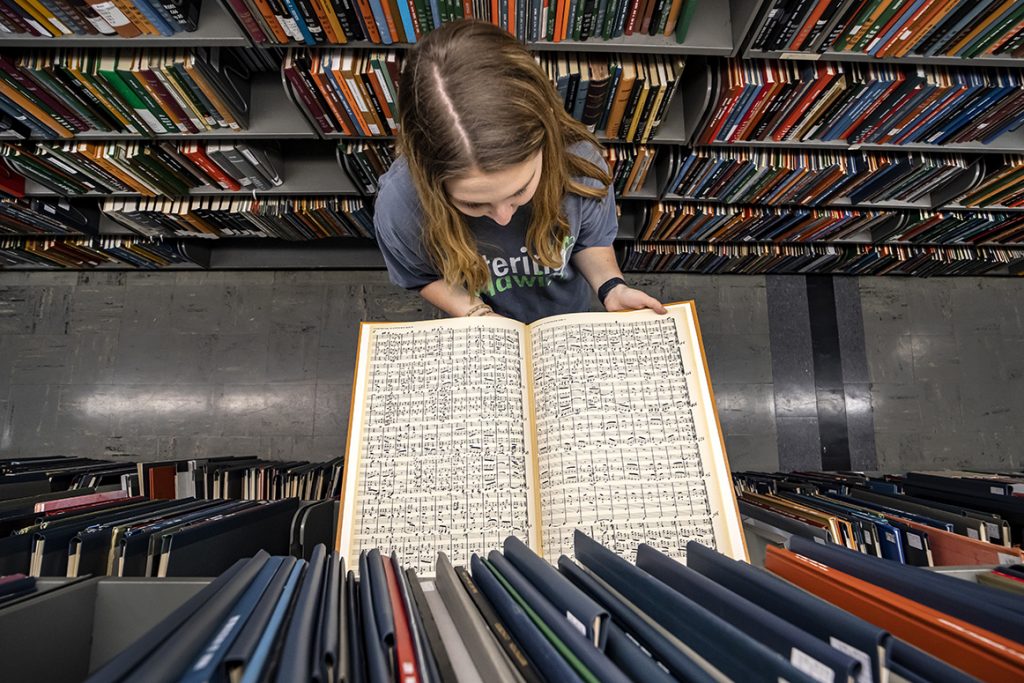
Graduate students also enjoy access to one of the leading academic music libraries in the nation, with holdings of more than 165,000 books and scores, 12,000 microforms, 55,000 audio and video recordings, and over 10,000 rare items, including 4,600 Italian opera librettos from 1600 through the 19th century.
Learn More About Our Graduate Program
| Faculty Bios | Graduate Students | Dissertations | Student News |
|---|